


 Location
 Login
Login
TL;DR:
- An ATV is a vehicle with a straddle seat, handlebar controls, and low-pressure tires designed for off-road use. Different types, like sport and utility ATVs, suit various riding and work purposes, requiring active rider involvement. They are not street legal in most areas due to their design, and choosing the right model depends on rider experience, terrain, and safety considerations.
Most people can picture an ATV, but fewer can actually define one. You might call it a quad, a four-wheeler, or an off-road bike, and you would not be completely wrong. But the confusion runs deeper than just naming. People regularly mix up ATVs with UTVs, dirt bikes, or side-by-sides, and that confusion matters when you are trying to buy or ride the right machine. This guide cuts through all of that. You will learn the precise ATV definition, how these vehicles work, what types exist, and why so many riders and working professionals keep coming back to them.
Table of Contents
- Key takeaways
- What is an ATV, exactly?
- Types of ATVs and how they differ
- How an ATV works and handles terrain
- Benefits and common uses of ATVs
- ATVs vs. UTVs, motorcycles, and similar vehicles
- My honest take on ATVs and what new buyers get wrong
- Find the right ATV for your riding style
- FAQ
Key takeaways
| Point | Details |
|---|---|
| Standard ATV definition | An ATV is defined by straddle seating, handlebar controls, and low-pressure tires built for off-road terrain. |
| Multiple types exist | Sport and utility ATVs serve different purposes; knowing the difference helps you pick the right machine. |
| Active rider involvement | Riding an ATV requires body movement for steering and balance, unlike driving a car or UTV. |
| Not street legal | ATVs are not designed or licensed for road use in most states due to tire and handling limitations. |
| Match the machine to the rider | Engine size, model classification, and intended terrain should guide every purchase decision. |
What is an ATV, exactly?
ATV stands for All-Terrain Vehicle. That answers the “what does ATV stand for” question, but the name only tells part of the story. The American National Standards Institute (ANSI) gives a more precise ATV definition: a vehicle with low-pressure tires, handlebars, and a straddle seat designed to be operated by a single rider across unpaved, uneven terrain.
You might also hear these vehicles called quads, quad bikes, or four-wheelers. All of those names typically refer to the same machine, though the core design can vary. Most ATVs run on four wheels, but some specialized models use three, six, or eight wheels depending on the intended application.
The defining physical characteristics that separate an ATV from other off-road vehicles include:
- Straddle seat: You sit on top of the machine like a motorcycle, not inside it like a car or UTV.
- Handlebar steering: You steer with handlebars, not a wheel. This contributes to the active riding feel.
- Low-pressure tires: Wide, knobby tires with low pressure grip loose terrain like mud, gravel, and soft soil.
- Compact frame: ATVs are built narrow and light for maneuverability in tight trails and rough terrain.
ATVs are generally designed for single operators, though tandem models exist that carry a driver and one passenger. One common misconception is that a motorcycle with wide tires qualifies as an ATV. It does not. The straddle seat and handlebar design overlap, but ATVs are a distinct vehicle category defined by their tire design, weight distribution, and terrain-specific engineering.
Types of ATVs and how they differ
Not every ATV is built for the same job. Once you understand the main classifications, choosing the right machine becomes much clearer.
Sport vs. utility ATVs
The most important split in the ATV market comes down to sport versus utility. Sport ATVs prioritize speed and agility, with a lightweight frame, performance suspension, and engines tuned for quick acceleration. Utility ATVs go the opposite direction: larger engines, stronger suspension built for carrying loads, racks for cargo, and often a tow hitch.
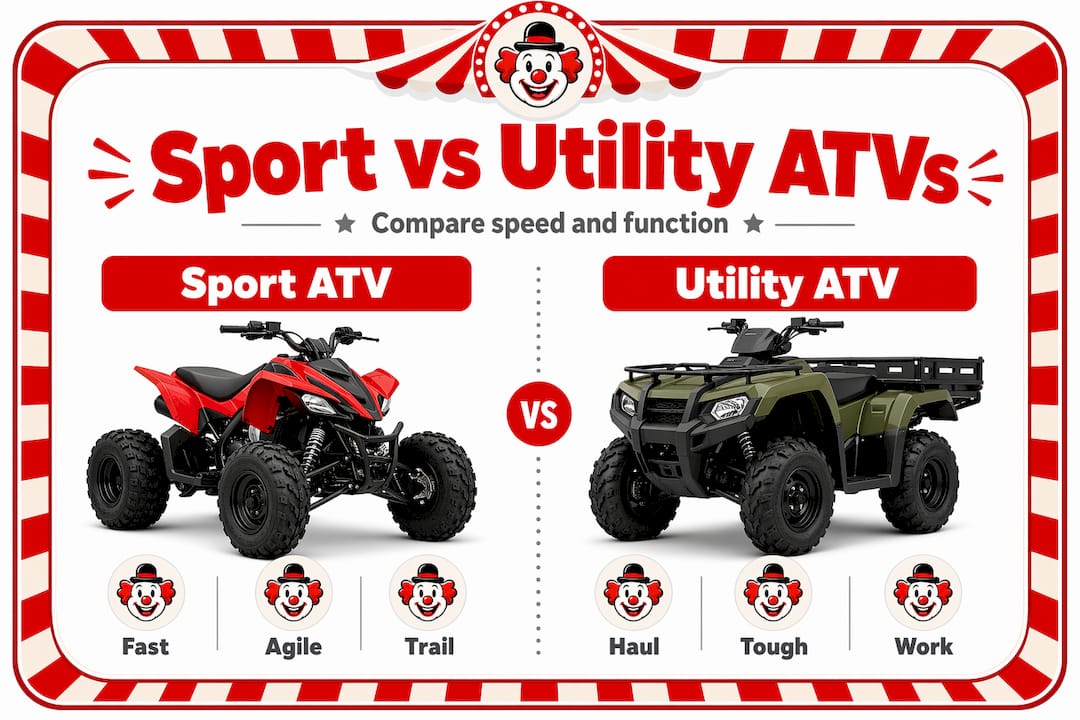
| Feature | Sport ATV | Utility ATV |
|---|---|---|
| Primary purpose | Trail riding, racing | Farm work, hauling, hunting |
| Engine size | Typically 250cc to 450cc | Often 400cc to 700cc and above |
| Suspension | Sport-tuned, low clearance | Heavy-duty, higher clearance |
| Cargo capacity | Minimal | Front and rear racks, towing |
| Rider position | Forward-leaning | More upright |
Size classifications
Beyond sport and utility, ATVs also break into size categories. Youth models typically run engines under 90cc and are scaled down for younger, smaller riders. Mid-size models fall in the 200cc to 300cc range and work well for teenagers or lighter adults. Full-size models start around 400cc and go up to 1000cc or more for demanding work or aggressive trail riding.
Beginners are advised to start with smaller engine sizes and less powerful models until riding confidence and technique are well developed. There are also specialized models built for specific conditions: high-clearance builds for rocky terrain, mud-specific ATVs with aggressive tire profiles, and utility-style machines that blur the line between ATV and UTV with their added features.
Pro Tip: If you are shopping for your first ATV, resist the urge to buy the most powerful model in your budget. A mid-size ATV with manageable power will help you build technique and confidence without putting yourself at unnecessary risk.
How an ATV works and handles terrain
Understanding how an ATV functions explains why it performs so well off-road and why it requires a different skill set than driving a car.
The active riding system
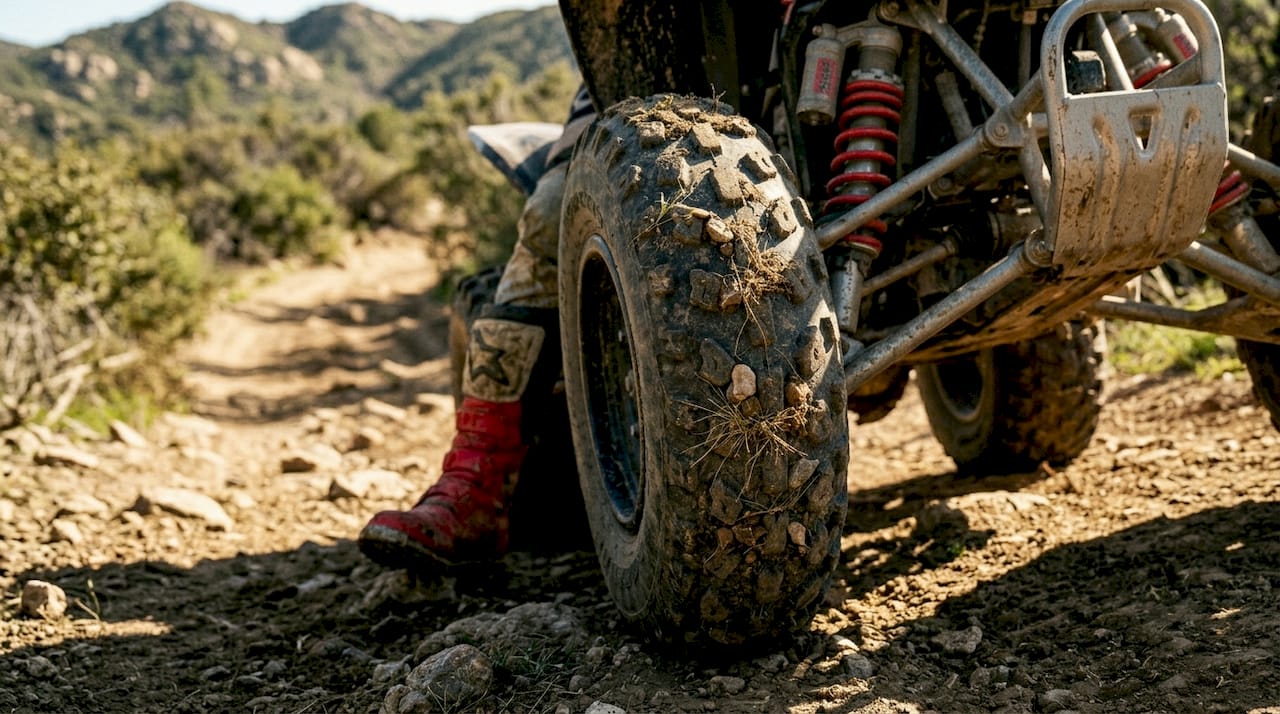
The biggest difference between an ATV and almost any other vehicle is that you do not just steer it. You move with it. ATVs require active rider input through body movement to maintain balance and traction when cornering, climbing, or navigating loose terrain. Leaning into turns, shifting your weight on hills, and adjusting your body position are all part of how the machine stays stable and controlled.
This active physical involvement is what gives ATV riding its reputation as an adrenaline-filled and immersive experience. You are not a passive driver. You are part of the vehicle’s balance system.
The core controls most riders will interact with include:
- Throttle: Located on the right handlebar, controls engine speed and acceleration.
- Handlebars: Provide steering input but work in combination with rider body position.
- Brakes: Typically operated through hand levers and sometimes a foot brake depending on the model.
- Gear selector or automatic transmission: Larger ATVs often have manual gears; many entry-level and mid-size models use fully automatic transmissions.
Tires, suspension, and terrain performance
The low-pressure tires on an ATV are not just a design choice. They are central to how the machine grips and navigates rough surfaces. A larger contact patch at lower pressure means better traction on mud, sand, and loose gravel. The suspension system works alongside the tires to absorb bumps and keep all four wheels in contact with the ground on uneven terrain.
ATVs are not designed or legal for street use in most regions because those same tires and control systems that perform so well off-road become unpredictable on paved surfaces. This is not a limitation to overlook. Riding an ATV on a public road in most U.S. states carries legal consequences and serious safety risks.
Pro Tip: Electric Power Steering significantly reduces arm and shoulder fatigue on longer rides or rough terrain. If you plan to spend extended time in the saddle or are buying for an older rider, prioritize models with EPS over raw engine power.
Benefits and common uses of ATVs
The appeal of ATVs spreads across two very different worlds: recreation and practical work. That dual utility is a major reason they remain one of the most popular off-road vehicle categories in the U.S.
On the recreational side, ATVs are used for:
- Trail riding: Single-track and multi-use trails on public land or private property
- Recreational racing: From casual weekend events to organized sport ATV competitions
- Adventure touring: Covering large distances across varied terrain, especially in western states
- Hunting access: Reaching remote areas that trucks or UTVs cannot navigate due to width or terrain
On the utility and work side, ATVs earn their place on farms, ranches, and large properties for:
- Livestock management: Checking fences and moving between pastures quickly
- Spraying and hauling: With attachments like spray tanks, rear dump beds, or front plows
- Property maintenance: Moving materials, monitoring large acreages, or clearing snow with a mounted plow
Compared to a truck or full-size utility vehicle, an ATV can reach areas that wider machines simply cannot access. Narrow trails, steep slopes, and soft ground all favor the ATV’s compact footprint and lighter weight. For recreational users, check out this overview of off-road vehicle options to see how ATVs compare against other machines you might be considering.
ATVs vs. UTVs, motorcycles, and similar vehicles
People frequently confuse ATVs with two closely related vehicle types. Knowing the differences helps you decide which machine actually fits your needs.
ATV vs. UTV
This is the most common point of confusion. UTVs feature side-by-side seating and a steering wheel, while ATVs use straddle seating and handlebars. That difference in control and seating completely changes the riding experience. UTVs carry multiple passengers, offer enclosed cab options, and handle cargo capacity that no ATV can match. ATVs are more compact, more agile, and demand more physical engagement from the rider. For a deeper look, the Importjunkies guide on UTV features and differences covers the UTV category in detail.
| Feature | ATV | UTV |
|---|---|---|
| Seating | Straddle, solo or tandem | Side-by-side, 2 to 6 passengers |
| Controls | Handlebars | Steering wheel |
| Cargo | Limited racks | Bed, heavy payload capacity |
| Trail width | Narrower | Often 50 inches or more |
| Riding style | Active, physical | Passive, car-like |
Many trails have width restrictions of around 50 inches, and modern full-size UTVs increasingly push or exceed that limit. An ATV’s narrower profile gives it access to trail systems that a UTV legally cannot enter.
ATV vs. motorcycle
A motorcycle can go off-road. That does not make it an ATV. Motorcycles are two-wheeled vehicles built primarily around road or track use. Even purpose-built off-road motorcycles like enduro or motocross bikes differ from ATVs in wheel count, tire design, and the physics of balance. ATVs provide four-point stability that makes them far more accessible for new riders and more practical for carrying gear or attachments.
My honest take on ATVs and what new buyers get wrong
I have seen a lot of first-time ATV buyers make the same mistake. They walk in focused on engine size and walk out with a machine that is too much for where they are as a rider. A 700cc utility ATV sounds impressive. But if you are learning to ride or plan to use it mostly for light trail work, that power is unnecessary and the machine’s size will fight you more than help you.
What I have found actually matters more than engine displacement is the balance between comfort and capability. The right ATV is less about raw power and more about fit: rider experience, terrain type, and how much physical effort you want to put into the ride. If you are buying for someone older or planning long rides, models with EPS and automatic transmissions reduce fatigue significantly. That matters more than an extra 100cc.
Safety is the other area I never skip in a conversation like this. Helmets are not optional. ATVs tip. They roll. The active riding style that makes them exciting is the same thing that creates risk when technique breaks down. Respect the machine, ride within your skill level, and the experience stays enjoyable for a long time.
— Gary
Find the right ATV for your riding style
If you have been researching what an ATV is, you are probably getting close to making a decision. Importjunkies carries a range of ATVs built for different rider levels and purposes, from beginner-friendly machines to hard-working utility models.

The MSA 300cc 4x4 ATV with snow plow is a strong option if you need real four-wheel-drive capability and year-round utility. For newer riders or lighter use, the 110cc mini sport ATV offers a fully automatic transmission and manageable power in a compact frame. Browse the full selection at Importjunkies and compare specifications, pricing, and features before you commit. If budget or financing is a concern, check out this guide on ATV financing options to understand what paths are available to you.
FAQ
What does ATV stand for?
ATV stands for All-Terrain Vehicle. The name refers to its design intent: operating across unpaved, rough, or uneven ground where standard vehicles cannot travel.
How is an ATV different from a UTV?
ATVs use straddle seating and handlebars, while UTVs feature side-by-side seating and a steering wheel. UTVs carry more passengers and cargo; ATVs are more compact and require active physical input from the rider.
Are ATVs street legal?
No. ATVs are not street legal in most U.S. states because their low-pressure tires and handlebar controls are not designed for paved road use. Operating one on public roads is illegal and unsafe in most jurisdictions.
What is a good ATV for beginners?
Beginners should look at smaller engine models, typically in the 110cc to 200cc range, with automatic transmissions. These machines are easier to control while you develop riding technique and terrain awareness.
What are the most common uses for ATVs?
ATVs are used for trail riding, hunting access, farm work, property maintenance, and recreational racing. Their compact size and terrain capability make them practical for both outdoor recreation and light utility tasks.
Recommended
- What is a UTV? Complete guide to utility terrain vehicles – Saferwholesale || Import Junkies || Great Sports
- Golf carts vs. ATVs: Choosing the best utility vehicle – Saferwholesale || Import Junkies || Great Sports
- Your guide to every type of off-road vehicle – Saferwholesale || Import Junkies || Great Sports
- Types of Recreational Vehicles: Match Your Needs – Saferwholesale || Import Junkies || Great Sports


