


 Location
 Login
Login
TL;DR:
- An ATV buying checklist provides a step-by-step evaluation of purpose, condition, and safety before purchase. It emphasizes selecting the correct category, verifying paperwork, and inspecting key mechanical components in a logical order. Conducting a cold start test and considering total costs are essential to avoid costly mistakes and ensure a satisfactory buy.
An ATV buying checklist is a step-by-step evaluation framework that helps you assess purpose fit, mechanical condition, and safety systems before committing to a purchase. Whether you’re shopping for a utility workhorse, a trail rider, or a sport machine, skipping a structured review process is how buyers end up with money parked in the garage. This guide walks you through every stage of the ATV buying process, from defining your riding needs to verifying paperwork and running a full mechanical inspection, so you make a decision you won’t regret.
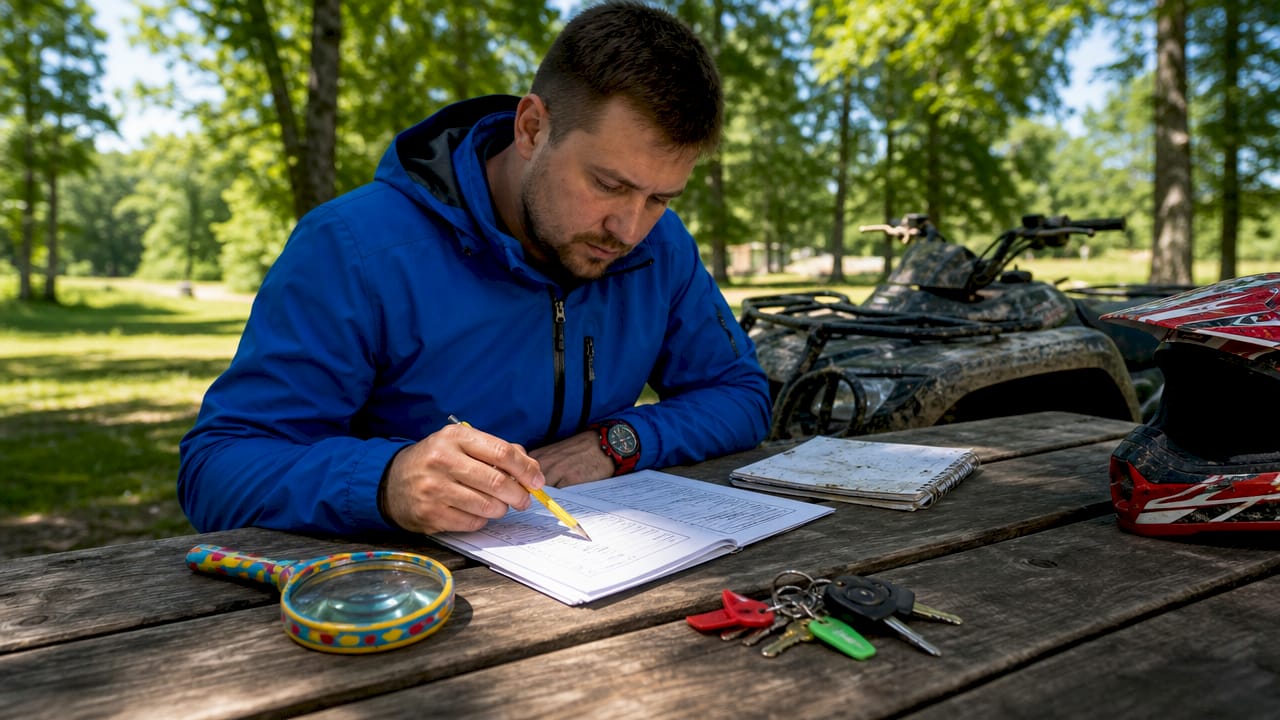
1. Start with your ATV buying checklist: define your needs first
The biggest determinant of purchase satisfaction is matching the ATV category to your riding priorities before you ever look at a specific machine. Buying the wrong category means you’ll either be underpowered for the job or riding something built for a purpose you don’t have. Get this step right and the rest of the checklist becomes much easier to apply.
There are four primary ATV categories, and each one is built around a different use case. Utility ATVs prioritize towing, hauling, and farm or property work. Recreational trail ATVs balance comfort and capability for mixed-terrain riding. Sport ATVs are built for agility, speed, and performance riding. Youth ATVs are scaled-down machines designed for younger or smaller riders with appropriate power limits.
Pro Tip: Before you test ride anything, write down your three most common riding scenarios. If two of them involve hauling equipment or plowing, you need a utility machine. If all three involve single-track trails, a sport or trail ATV fits better. Terrain type and rider skill level should drive this decision, not price or appearance.
| ATV category | Primary use | Key features to prioritize |
|---|---|---|
| Utility | Farm, property, towing | Towing capacity, rack space, 4WD |
| Recreational/trail | Mixed terrain, leisure | Comfort, suspension travel, reliability |
| Sport | Performance, racing, agility | Engine output, weight, handling |
| Youth | Beginner, younger riders | Speed limiter, size, safety features |
For a broader look at how ATVs compare to other off-road options, the Importjunkies guide to every type of off-road vehicle is worth reviewing before you narrow your search.
2. Verify paperwork and documentation before anything else
Ignoring paperwork verification can result in expensive legal and financial problems after purchase, including title disputes, liens, and registration blocks. This step applies to both new and used ATVs, though it matters most when buying privately. Do this before you spend a single minute inspecting the machine itself.
The core documentation checks for any used ATV purchase are:
- VIN match: Confirm the VIN stamped on the frame matches the number on the title and any registration documents exactly.
- Title status: Verify the title is clean, not salvage, rebuilt, or bonded. Check that the seller’s name matches the title.
- Lien check: Contact your state’s DMV or use a VIN lookup service to confirm no outstanding liens exist on the vehicle.
- Recall history: Run the VIN through the NHTSA database to check for open safety recalls.
- Odometer or hour meter records: Ask for any service records, receipts, or maintenance logs the seller has on file.
Watch for red flags like mismatched VIN tags, fresh paint over the frame stamp area, or odd welds near the VIN plate. These are signs of tampering. Walk away if paperwork is incomplete or the seller refuses to allow a full inspection or test ride.
Pro Tip: If a seller says the title is “in the mail” or “at the DMV,” treat that as a hard stop. Never exchange money for a vehicle without a clean title in hand.
3. Inspect the frame and body before checking the engine
Inspection order matters: start at the frame to spot major hidden damage early, before you invest time evaluating the drivetrain or electronics. A compromised frame makes every other positive attribute irrelevant. This is the step most first-time buyers skip, and it’s the one that costs them the most.
Get low and look at the frame rails from multiple angles. You’re looking for bends, cracks, or stress fractures near weld points. Fresh paint on isolated sections of the frame is a strong indicator that damage was repaired and covered up. Check the front and rear subframes, the A-arm mounting tabs, and the area around the footpegs for any signs of impact damage or non-factory welds.
Body panels tell a secondary story. Misaligned panels, mismatched plastic colors, or cracked mounting tabs suggest the machine has been dropped or rolled. These cosmetic issues aren’t always deal-breakers, but they tell you how the previous owner treated the vehicle. A machine that’s been rolled once may have hidden structural issues that don’t show up until you’re on the trail.
4. Run a full mechanical inspection in the right order
A thorough mechanical review follows a logical sequence: suspension and steering, tires and wheels, engine bay, drivetrain, and controls. Inspect the frame first for bends, fresh paint, welds, or cracked tabs to detect past damage, then work outward from there.
Suspension and steering:
- Push down on each corner of the ATV and check for smooth, even rebound with no clunking.
- Grab each front wheel and try to move it side to side. Any play indicates worn wheel bearings.
- Inspect CV boots for cracks or grease leaks. Torn boots mean contaminated joints and an upcoming repair bill.
- Check tie rod ends and ball joints for looseness by rocking the wheel in and out.
Tires and wheels:
Uneven tire wear may indicate alignment problems or neglected front-end repairs. Look beyond tread depth to wear patterns as diagnostic signs. Wear on one edge of a front tire points to alignment or suspension issues. Check for cuts, sidewall cracks, and punctures on all four tires.
Engine bay:
- Pull the dipstick and check oil color. Dark brown or black oil means overdue maintenance. Milky oil means coolant contamination.
- Inspect the air filter. A heavily clogged filter suggests the machine was ridden hard in dusty conditions without regular service.
- Check coolant level and look for residue around hose connections that might indicate past leaks.
- Inspect the battery terminals for corrosion and verify the battery holds a charge.
Pro Tip: Wiring condition is one of the most overlooked indicators of machine health. Look for taped splices, exposed wires, or aftermarket wiring that doesn’t match the factory harness. Electrical problems on ATVs are time-consuming and expensive to trace.
5. Perform a cold start test and extended test ride
Cold engine testing reveals issues that warmed-up tests hide, including hard starting, rough idle, unusual knocking, or excessive smoke on startup. Insist on arriving before the seller starts the machine. If the engine is already warm when you arrive, ask why and request time for it to cool down completely.
During the cold start, listen for the following: a stable idle that settles within 30 to 60 seconds, no knocking or ticking from the top end, and no blue or white smoke from the exhaust after the first few seconds. Blue smoke indicates oil burning. White smoke after the engine warms up points to a head gasket issue. Both are significant repair costs.
The test ride needs to be long enough to evaluate real performance. A short loop around a parking lot tells you almost nothing. Ride it on varied terrain if possible, and specifically test throttle response at low and mid-range RPM, braking feel and stopping distance, steering tracking (does it pull to one side?), and 4WD engagement if the machine has it. Any hesitation, grinding, or unusual vibration during the ride is a flag worth investigating before you agree to a price.
6. Evaluate safety features and functional systems
Verifying all lights and controls function properly is a pre-ride requirement, not an afterthought. The Honda Rancher 2025 owner’s manual, for example, specifies checking the headlight, brake light, taillight, dimmer switch, stop switch, and steering backlash as part of every pre-ride inspection. Apply the same standard when evaluating any ATV purchase.
Work through this safety checklist before you finalize any decision:
- Brakes: Test front and rear brakes independently. Both should feel firm and stop the machine without pulling to one side.
- Tires: Check tire pressure against the manufacturer’s spec listed in the owner’s manual or on the footwell sticker. Inspect tread depth and look for cuts, cracks, or punctures.
- Lighting: Confirm headlight, brake light, and taillight all function. Check the high/low beam switch.
- Throttle and kill switch: The throttle should return to idle instantly when released. The kill switch should cut the engine immediately.
- Steering backlash: Grab the handlebars and check for excessive play before the wheels respond. Minor play is normal; significant looseness is not.
- Seat belts or harnesses: If the machine has a cab or roll cage, verify restraints are present and functional.
Pro Tip: Bring a helmet and riding gear to the test ride. You’ll ride more confidently and evaluate the machine more accurately when you’re properly protected. It also signals to the seller that you’re a serious, experienced buyer.
7. Calculate total cost before making a final decision
The purchase price is the starting point, not the total cost. A used ATV priced $500 below market may need $800 in immediate repairs, making it the more expensive option. Build a realistic cost picture before you commit.
Factor in these additional expenses:
- Immediate maintenance: Oil change, air filter, spark plug, brake fluid flush, and tire replacement if needed.
- Accessories: Winch, plow, cargo racks, skid plates, or tow hitch depending on your use case.
- Transport: Trailer rental or purchase, tie-down straps, and loading ramps.
- Registration and insurance: State registration fees vary. Off-road vehicle insurance is inexpensive but worth carrying.
- Storage: Covered storage or a shed if you don’t already have one.
A machine with low hours but heavy abuse is a worse buy than a higher-hour but well-maintained ATV. Condition and maintenance history matter more than the number on the hour meter. Ask the seller directly: what maintenance has been done, and when was the last service?
Pro Tip: Prioritize paperwork alignment and mechanical condition over cosmetic appearance. A scratched-up ATV with clean fluids, solid frame, and matching VIN is a better buy than a shiny machine with questionable documentation.
Key takeaways
A successful ATV purchase depends on matching the right category to your use case, verifying documentation before inspection, and evaluating mechanical condition in a logical order from frame outward.
| Point | Details |
|---|---|
| Category fit comes first | Choose utility, trail, sport, or youth based on your primary riding scenarios before evaluating any machine. |
| Paperwork protects you | Always match VIN on frame to title and run a lien check before agreeing to any price. |
| Inspection order saves time | Start at the frame, then suspension, tires, engine, and controls to catch major issues early. |
| Cold start is diagnostic | Insist on a cold engine start to reveal idle problems, smoke, and hard-starting issues. |
| Total cost beats sticker price | Add maintenance, accessories, transport, and registration to the purchase price before deciding. |
What most buyers get wrong about ATV inspections
I’ve seen a lot of buyers walk away from a solid machine because it had scratched plastics, and I’ve seen others hand over cash for a clean-looking ATV that needed a full engine rebuild within two months. The pattern is consistent: buyers focus on what they can see and skip what they can’t.
The cold start test is the single most revealing step in the entire ATV buying workflow, and it’s the one most commonly skipped. Sellers know this. A machine that’s been running for 20 minutes before you arrive has already hidden its worst habits. Unstable idle, hard starting, and top-end noise all disappear once the engine is warm. Showing up early and insisting on a cold start costs you nothing and tells you more than any visual inspection can.
The other mistake I see regularly is treating the inspection as a single pass rather than a structured sequence. If you jump straight to the engine without checking the frame first, you might spend 30 minutes evaluating a drivetrain on a machine with a cracked frame rail. The ATV features guide from Importjunkies is a useful reference for understanding what to look for at each stage. Work the checklist in order, and you’ll save time and avoid expensive surprises.
— Gary
Browse reliable ATVs and UTVs at Importjunkies
Importjunkies carries a range of utility and recreational ATVs that have been selected for practical capability and value. If your checklist points toward a utility machine, the 400cc 4x4 Snow Master VX combines a snow plow and dump bed in a single platform, making it a strong option for property work and seasonal use. For buyers focused on entry-level utility with a tighter budget, the 200cc ATV with snow plow offers automatic transmission with reverse and plow capability at an accessible price point. Review each product’s specifications against the criteria from your checklist to confirm compatibility with your terrain and use case.
FAQ
What should I check first on a used ATV?
Start with the frame. Look for bends, cracks, fresh paint over isolated sections, and non-factory welds before evaluating any other component. A compromised frame makes every other positive attribute irrelevant.
How do I know if an ATV’s paperwork is legitimate?
Match the VIN stamped on the frame to the number on the title exactly, then run a VIN check through the NHTSA database and your state’s DMV to confirm clean title status and no open recalls or liens.
Is a cold start test really necessary?
Yes. Cold engine testing reveals hard starting, rough idle, and unusual noise that disappear once the engine warms up. Insist on arriving before the seller starts the machine.
What does uneven tire wear tell you about a used ATV?
Uneven wear patterns indicate alignment problems or neglected front-end repairs. Edge wear on a front tire specifically points to suspension or steering issues that go beyond a simple tire replacement.
How much should I budget beyond the purchase price?
Plan for immediate maintenance costs such as oil, filters, and brakes, plus accessories, transport, registration, and insurance. A realistic buffer of 10 to 20 percent above the purchase price covers most first-year ownership costs on a used machine.
Recommended
- What Is an ATV? Features, Types, and Uses Explained – Saferwholesale || Import Junkies || Great Sports
- Your guide to every type of off-road vehicle – Saferwholesale || Import Junkies || Great Sports
- All-Terrain Vehicle Features List: 2026 Buyer’s Guide – Saferwholesale || Import Junkies || Great Sports
- Must-Have Features in UTVs: Your 2026 Buyer’s Guide – Saferwholesale || Import Junkies || Great Sports


