


 Location
 Login
Login
TL;DR:
- Choose battery types based on driving distance, maintenance willingness, and budget; lithium offers the best longevity and performance.
- Lead-acid batteries are affordable but require regular watering and have a shorter lifespan compared to AGM and lithium options.
- Upgrading to lithium or AGM batteries is ideal for frequent users, heavy-duty needs, or hot climates to maximize efficiency and reduce maintenance.
Picking the right battery for your golf cart is one of those decisions that looks simple on the surface but quietly shapes everything from how far you can ride to how much time you spend on upkeep. Most buyers default to whatever came with the cart or whatever is cheapest at the time, and that choice often leads to frustration down the road. This guide breaks down the three main battery types available for golf carts, compares them side by side, and helps you match the right chemistry to your actual use habits, budget, and maintenance tolerance. By the end, you’ll know exactly what to look for before spending a dollar.
Table of Contents
- Understanding the main golf cart battery types
- Lead-acid batteries: Cost, care, and common pitfalls
- Lithium-ion and AGM: Modern upgrades with new advantages
- Choosing the right battery for your needs
- Our perspective: The real-world trade-offs most owners overlook
- Explore better carts and batteries at Import Junkies
- Frequently asked questions
Key Takeaways
| Point | Details |
|---|---|
| Battery type matters | Choosing the right battery type impacts performance, maintenance, and long-term cost. |
| Lead-acid vs. lithium | Lead-acid batteries are cost-effective but require regular care; lithium offers more convenience and higher initial cost. |
| Upgrading pays off | Switching to lithium or AGM can reduce hassle and boost range for frequent users. |
| Match battery to usage | Consider your driving patterns and care preferences before choosing a battery. |
Understanding the main golf cart battery types
Before you can compare options meaningfully, you need to know what you’re actually choosing between. Three battery types dominate the golf cart market: flooded lead-acid, AGM (Absorbent Glass Mat), and lithium-ion (most commonly LiFePO4, or lithium iron phosphate).
Flooded lead-acid batteries are the original standard. They use liquid electrolyte, require regular watering, and are the most affordable upfront. Lead-acid batteries require regular maintenance and charge in 8 to 10 hours. They remain the most common option in carts used on courses and in neighborhoods simply because the purchase price is low.
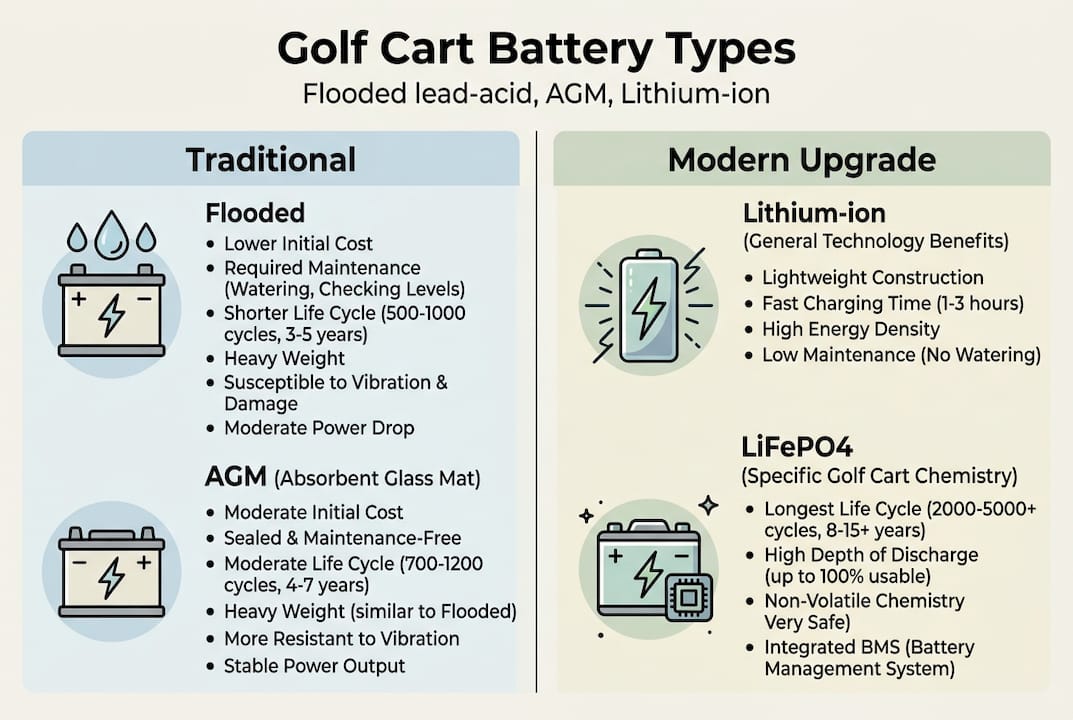
AGM batteries are a sealed variation of lead-acid technology. Instead of free liquid, the electrolyte is absorbed into a fiberglass mat, which makes them spill-proof and maintenance-free. They cost more than flooded lead-acid but less than lithium, and they sit in the middle ground for performance.
Lithium-ion batteries, specifically LiFePO4, are the premium tier. They are lighter, charge faster, last longer, and require almost zero maintenance. The tradeoff is a higher upfront cost. You can find a reliable lead-acid battery option or step up to a LiFePO4 lithium battery upgrade depending on what fits your situation.
Here is a quick comparison to anchor the differences:
| Feature | Flooded lead-acid | AGM | Lithium-ion (LiFePO4) |
|---|---|---|---|
| Weight per set | 360-480 lbs | 300-400 lbs | 100-200 lbs |
| Maintenance | High | None | None |
| Charge time | 8-10 hours | 8-10 hours | 2-4 hours |
| Lifespan | 3-5 years | 4-6 years | 8-10+ years |
| Upfront cost | Low | Moderate | High |
Typical applications by battery type:
- Flooded lead-acid: Recreational weekend use, budget-conscious buyers, carts that sit for extended periods
- AGM: Neighborhood and campground use, owners who want no-maintenance lead-acid performance
- Lithium-ion: Daily drivers, commercial fleets, heavy-duty utility use, performance-focused buyers
Lead-acid batteries: Cost, care, and common pitfalls
With the basics covered, let’s break down the most traditional and widely used type: lead-acid batteries. These batteries have powered golf carts for decades, and for good reason. The cost to get started is lower than any other option on the market, and replacement parts and service are easy to find nearly everywhere.

A flooded lead-acid battery works by submerging lead plates in a liquid electrolyte solution made of sulfuric acid and water. When the battery discharges, the chemical reaction slowly depletes the water in that solution. That lost water needs to be replaced manually, which is the single most important maintenance task for this battery type.
Here is a basic maintenance checklist every lead-acid owner should follow:
- Check water levels every 2 to 4 weeks during active use
- Top off with distilled water only, never tap water
- Clean battery terminals monthly to prevent corrosion buildup
- Inspect cable connections for looseness or damage
- Store at full charge if the cart will sit unused for more than two weeks
- Test specific gravity with a hydrometer once per season
The weight of a full lead-acid battery set is significant. Most 48-volt setups with six 8-volt batteries weigh between 360 and 480 pounds, which adds to overall cart weight and affects both performance and tire wear.
Lead-acid batteries offer a range of 20-25 miles per charge with a typical lifespan of 3 to 5 years when maintained properly.
That range makes them workable for most recreational riders, but if you are running your cart hard across hilly terrain or covering long daily distances, you may find yourself charging more often than expected.
Before buying a used cart, reviewing solid golf cart inspection tips can help you assess battery condition before committing. If you are using your cart in a residential setting, the guide on best options for neighborhoods walks through which setups work best for that environment.
Pro Tip: The number one killer of lead-acid batteries is chronic under-watering. Check levels after every charge cycle when first getting started, and you’ll quickly learn the right rhythm for your specific use pattern. Overcharging is the second biggest mistake, so invest in an automatic charger with a shutoff feature.
Lithium-ion and AGM: Modern upgrades with new advantages
Lead-acid batteries have been the norm, but let’s look at the modern alternatives shaking up the market. Both AGM and lithium-ion batteries address specific pain points that flooded lead-acid technology creates.
AGM batteries use the same lead-acid chemistry but seal the electrolyte inside a glass mat separator. That design eliminates watering entirely and makes them safe to mount in any orientation. They charge at about the same speed as flooded lead-acid but handle deep discharge cycles better and recover more completely from partial charges.
Lithium-ion batteries, specifically LiFePO4, operate on a completely different chemistry. Lithium batteries offer reduced weight and significantly less maintenance compared to lead-acid. A full lithium pack for a 48-volt cart can weigh as little as 100 to 150 pounds compared to 400-plus for lead-acid, and that weight reduction noticeably improves acceleration and efficiency.
Here is a direct comparison of how these three options stack up for real-world ownership:
| Category | Flooded lead-acid | AGM | Lithium-ion |
|---|---|---|---|
| Charging time | 8-10 hours | 8-10 hours | 2-4 hours |
| Maintenance required | Yes | No | No |
| Lifespan (years) | 3-5 | 4-6 | 8-10+ |
| Real-world range | 20-25 miles | 22-28 miles | 35-50 miles |
| Total cost over 10 years | Moderate | Moderate-High | Lower long-term |
For buyers drawn to the electric golf cart benefits that lithium enables, the performance gap is real and noticeable in daily use. You can explore specific lithium battery details to see how a quality LiFePO4 unit compares to what you may already be running.
Who should consider upgrading to lithium or AGM:
- Riders who use the cart daily or near-daily
- Anyone who frequently forgets or dislikes battery maintenance
- Commercial or fleet operators who need reliable uptime
- Buyers in hotter climates where lead-acid water evaporates faster
Who is likely fine staying with standard lead-acid:
- Occasional weekend riders who charge once a week
- Budget buyers replacing a battery in an older cart
- Those who don’t mind a routine maintenance schedule
If you are evaluating a used golf cart with original batteries, it is worth knowing whether those batteries are lead-acid or something newer before factoring replacement costs into your offer.
Pro Tip: Lithium upgrades make the most financial sense when your cart sees more than 4 charging cycles per week or when replacement lead-acid costs are already adding up. Run the numbers over five years, and lithium almost always wins on total cost of ownership.
Choosing the right battery for your needs
Now that you see the technical and practical pros and cons, here is how to decide what works for your specific situation. Choosing a battery type impacts both maintenance costs and daily driving range, so this decision deserves more than a quick price comparison.
Start by answering these questions honestly:
- How many miles do you drive per week?
- Do you have a reliable place to charge overnight, or do you need fast top-ups?
- Are you willing to check water levels and clean terminals monthly?
- Is this cart for personal recreation, neighborhood use, or a working utility role?
- What is your realistic budget for the battery itself, not just the initial purchase?
Then run through this checklist to narrow down your choice:
- Calculate your range needs. If 20 to 25 miles per charge is enough, lead-acid works. If you need more, move to lithium.
- Be honest about maintenance habits. If the idea of monthly battery checks sounds like a chore you will skip, AGM or lithium is the smarter call.
- Factor in total cost over 5 years, not just sticker price. Lead-acid replacements every 3 to 5 years add up.
- Consider cart weight. Heavy carts on hilly terrain benefit most from the weight reduction lithium provides.
- Check your charger compatibility. Lithium batteries often require a charger rated for lithium chemistry.
For golf course operators, the article on selecting vehicles for your golf course goes deeper on fleet-level decisions. If you are deciding between a golf cart and other utility vehicles, the golf carts vs ATVs breakdown may also be useful context.
Recreational buyers who ride on flat terrain a few times a week can stretch a quality lead-acid set to five years with proper care. Heavy-duty utility buyers running a cart every day should take lithium seriously from day one. Commercial fleet operators should factor in charger infrastructure and replacement schedules across multiple units.
Our perspective: The real-world trade-offs most owners overlook
After exploring all the options, here is an unfiltered take from our years of working with golf carts and their owners. The biggest mistake we see is buyers making a battery decision based purely on what is cheapest today without thinking about what ownership actually looks like six months in.
Batteries are not one-size-fits-all. Your climate matters. Hot, dry regions eat through lead-acid water faster. Cold climates reduce lithium capacity temporarily. How you store your cart in the off-season also affects battery health more than most people realize.
We have heard it dozens of times: a $500 savings today can cost you twice as much in downtime and repairs later. Skipping a proper charger, neglecting water levels, or buying a battery that doesn’t match your use pattern leads to early failure every time.
Our honest advice is to think about your real habits, not your ideal habits. If you want to understand the broader electric vs gas carts trade-offs before committing, that comparison is worth your time too. Get the battery that fits your life, not the one with the best marketing.
Explore better carts and batteries at Import Junkies
Ready to take the next step? Here is where you can put your battery knowledge to practical use.
At Import Junkies, we carry a range of options that match exactly what this guide covers. Whether you are shopping for a new electric golf cart built for performance and daily use, looking to upgrade to upgraded lithium batteries for your existing cart, or just browsing to find the right fit, we have you covered. Explore all carts and batteries directly on our site and see competitive pricing with real product details, no guesswork required.
Frequently asked questions
How long do golf cart batteries last on average?
Most lead-acid batteries last between 3 and 5 years with proper watering, charging, and terminal maintenance. Lithium-ion batteries can last 8 to 10 years or more under similar conditions.
Why choose lithium-ion batteries for a golf cart?
Lithium batteries are lighter and need far less maintenance than lead-acid, plus they charge in 2 to 4 hours and provide a noticeably longer driving range per charge.
What is the driving range for a fully charged lead-acid golf cart battery?
On a full charge, a lead-acid battery range covers roughly 20 to 25 miles, depending on terrain, cart weight, and how well the batteries have been maintained.
Do AGM batteries require maintenance like lead-acid batteries?
No. AGM batteries are fully sealed and maintenance-free, meaning you never need to add water or clean electrolyte buildup from terminals the way you would with flooded lead-acid batteries.
Recommended
- Electric Golf Cart vs Gas: Which Wins? – Saferwholesale || Import Junkies || Great Sports
- PowerStar 48 Volt 105Ah LiFePO4 Lithium Golf Cart Battery With Charger – Saferwholesale || Import Junkies || Great Sports
- Why choose electric golf carts? Benefits for golfers and courses – Saferwholesale || Import Junkies || Great Sports
- Customize your golf cart: complete personalization guide – Saferwholesale || Import Junkies || Great Sports


