


 Location
 Login
Login
TL;DR:
- Modern utility trikes are powerful, stable vehicles suitable for delivery, off-road, and outdoor activities.
- They feature wide wheelbases, fat tires, high-torque motors, and reinforced frames for heavy loads.
- Proper load distribution, handling practice, and choosing the right model are key for safe and effective use.
Utility trikes have a reputation problem. Most people picture them as slow, niche vehicles meant for seniors or novelty rides at the county fair. That picture is outdated. Modern utility trikes offer powerful motors, load capacity, and stability that put them in serious competition with vans for last-mile delivery and with ATVs for off-road cargo work. Small business owners are using them to cut delivery costs. Outdoor enthusiasts are loading them with trail gear and heading places a standard bike never could. This guide breaks down how utility trikes work, what they do well, where they fall short, and how to choose the right one for your situation.
Table of Contents
- Understanding utility trikes: The mechanics and features that set them apart
- Top benefits: Why outdoor enthusiasts and small businesses choose utility trikes
- Common drawbacks and real-world limitations of utility trikes
- Choosing the right utility trike: Matching features to your needs
- What most buyers get wrong about utility trikes
- See the latest utility vehicles for your work or play
- Frequently asked questions
Key Takeaways
| Point | Details |
|---|---|
| Stability matters most | Wide wheelbase and rear differential give trikes unique steadiness for heavy or off-road use. |
| Cost-effective for business | Utility trikes can be faster and far cheaper than vans for last-mile delivery in busy U.S. cities. |
| Know the limits | Load placement, range, and handling must be matched to the job for safe, reliable performance. |
| Smart selection counts | Pick features like UL-certified batteries and modular cargo to align with your application. |
Understanding utility trikes: The mechanics and features that set them apart
A utility trike is a three-wheeled vehicle, often electric, that bridges the gap between a heavy-duty cargo bike and a full-sized utility terrain vehicle (UTV). They are built for people who need more carrying capacity and stability than a two-wheeler can offer, without the cost and bulk of a truck or UTV. Understanding what goes into one helps you evaluate whether it fits your needs.
The core mechanical advantages come from a few key components:
- Wide wheelbase: The wider stance lowers the center of gravity and improves lateral stability, especially when the cargo bay is loaded.
- Rear differential: This allows the two rear wheels to spin at different speeds through turns, preventing the tipping and skidding that fixed-axle designs cause.
- Fat tires: Wide, low-pressure tires grip loose dirt, gravel, wet grass, and packed trails. Fat tire electric trikes handle terrain that would stop a standard bike cold.
- High-torque motors: Most quality utility trikes run 750W to 1,500W hub motors generating 60 to 90 Newton-meters of torque, enough to climb grades up to 30 degrees under load.
- Hydraulic disc brakes: These provide consistent stopping power even in wet conditions and under heavy cargo weight.
The fat tires, rear differential, and high-torque motors work together to give utility trikes their traction and slope-climbing capability. That combination is what separates them from basic cargo bikes.
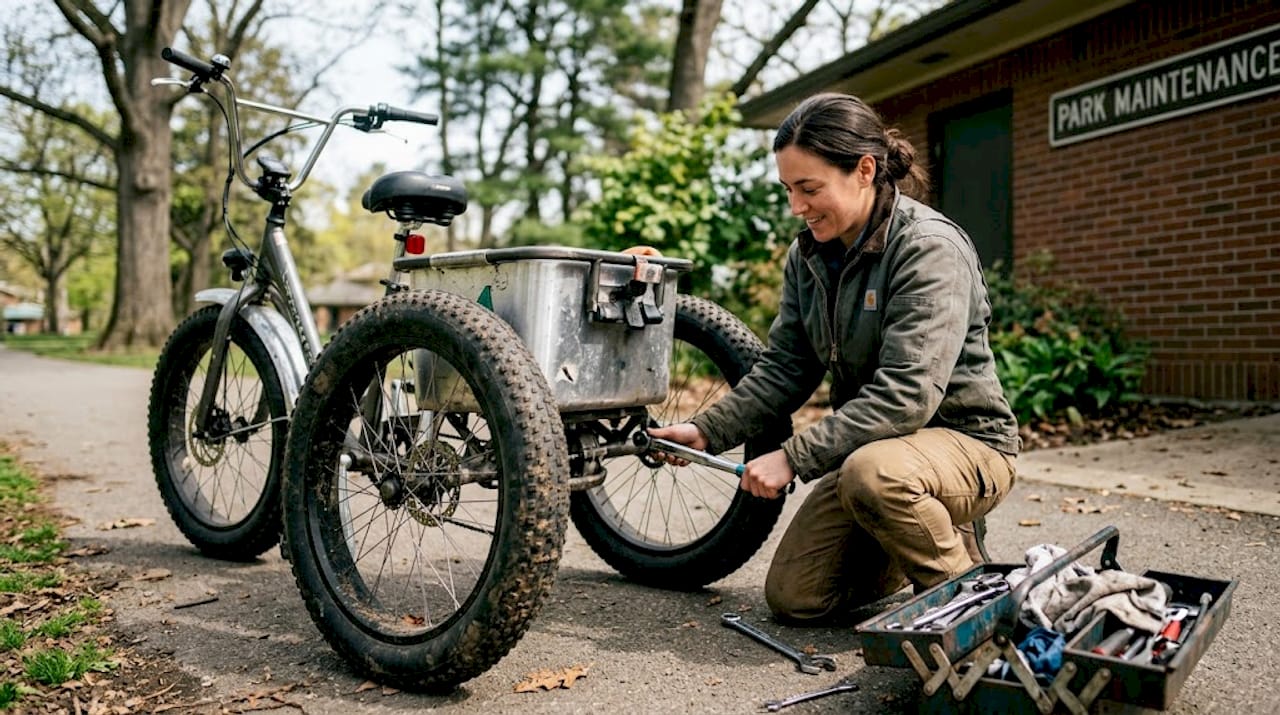
One thing buyers often overlook is frame flex. Under maximum rated load, cheaper frames can twist slightly, which affects steering response. Higher-quality models use reinforced welded steel or aluminum alloy frames to minimize this. When evaluating utility trike drivetrains, pay close attention to frame material and weld quality, not just motor wattage.
| Feature | Entry-level trike | Mid-tier trike | Commercial-grade trike |
|---|---|---|---|
| Motor output | 500W | 750-1,000W | 1,000-1,500W |
| Cargo capacity | 150-200 lbs | 250-350 lbs | 350-500 lbs |
| Range per charge | 20-30 miles | 35-55 miles | 40-70 miles |
| Braking system | Mechanical disc | Hydraulic disc | Hydraulic disc |
| Frame material | Steel | Alloy steel | Reinforced alloy |
Pro Tip: Always look for UL-certified batteries when buying an electric utility trike in the U.S. UL certification means the battery pack has been tested for thermal stability and short-circuit protection, which matters a lot if you are using the trike daily in outdoor heat or storing it in an enclosed space.
Top benefits: Why outdoor enthusiasts and small businesses choose utility trikes
Once you understand the mechanics, the real-world advantages become easier to evaluate. Utility trikes deliver different things to different users, and both groups tend to be surprised by how capable these vehicles are.
For outdoor enthusiasts, the biggest win is load capacity combined with off-road stability. You can carry a full day’s worth of trail equipment, fishing gear, or campsite supplies without needing a truck. The three-wheel stance means you are not constantly fighting balance on uneven ground. You can focus on the terrain ahead instead of keeping the vehicle upright. Many riders also use them as car alternatives for short-range rural errands where roads are unpaved or poorly maintained.
For small business owners, the numbers are hard to ignore. E-trikes are 1.61x faster than delivery vans in congested urban areas, and the cost per delivery drops significantly. That speed advantage adds up fast across a full workday.
Key business use cases include:
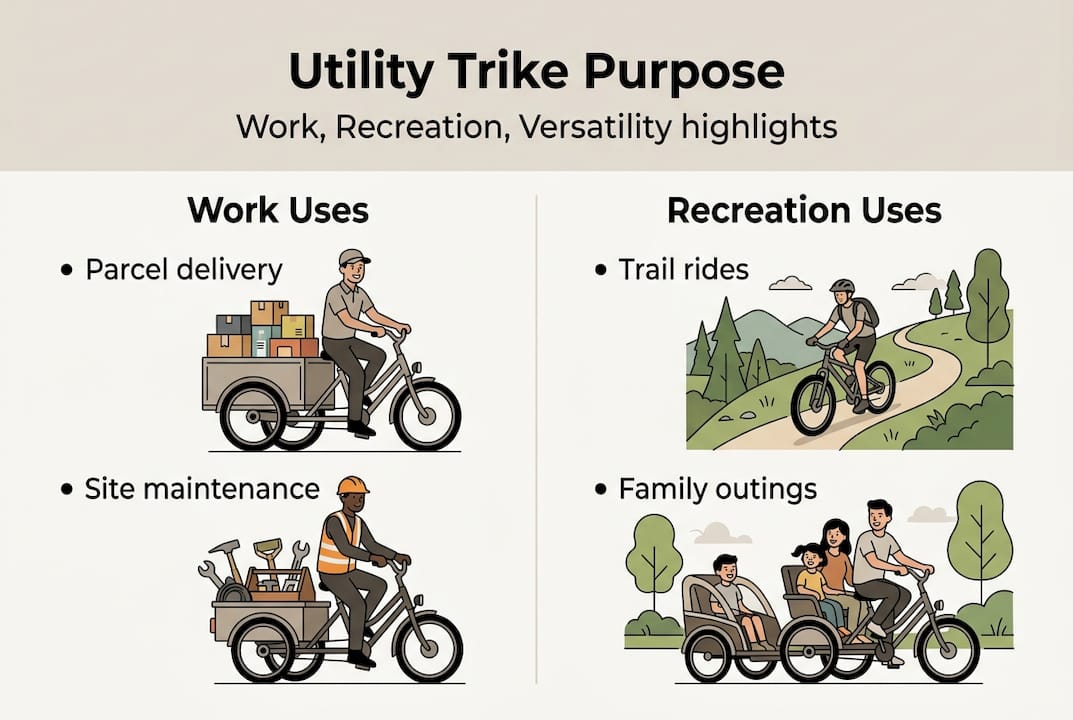
- Urban parcel and food delivery
- Mobile vending (food trucks, coffee carts, ice cream)
- Property and facility maintenance across large grounds
- Farm or nursery transport between buildings
- Event setup and equipment hauling
| Vehicle type | Avg. cost per delivery | Urban speed advantage | Daily maintenance cost |
|---|---|---|---|
| Delivery van | High | Baseline | Higher (fuel, parking) |
| Utility trike | Significantly lower | 1.61x faster in congestion | Lower (electric, fewer parts) |
| Cargo bike | Lowest | Fastest in tight areas | Lowest |
The emissions reduction and parking flexibility are real advantages in cities where van access is restricted. A business trike option with a built-in food or vending trailer can operate in pedestrian zones where a motor vehicle cannot legally enter. That access alone opens up revenue opportunities that a van-based operation simply cannot match.
Common drawbacks and real-world limitations of utility trikes
As with any vehicle, it is critical to be aware of their weaknesses and how to plan for them. Utility trikes are genuinely useful, but they are not the right tool for every situation.
Weight and bulk are the first issues most new owners encounter. A typical utility trike weighs 80 to 110 pounds, which makes them difficult to lift onto a truck bed or move manually off a path. If you get stuck or need to reposition, you will feel that weight immediately. Solo operators need to plan their routes carefully to avoid dead ends or tight spots.
Tipping risk is a real concern when loads are placed too high or too far back. The center of gravity (the point where the vehicle’s weight is balanced) shifts as you add cargo, and on side slopes or cambered roads (roads that angle to one side), that shift can cause the rear to slide or the vehicle to lean toward a tip.
“High center of gravity loads risk tipping; proper load placement and a learning curve for handling are real factors with utility trikes, not just fine-print warnings.”
Other limitations worth noting:
- Top speed: Most utility trikes are capped at 15 to 20 mph for safety. This is appropriate for cargo work but limits their use on fast roads.
- Handling curve: Three-wheel steering feels different from both bikes and cars. New riders consistently report needing two to four weeks of regular use before handling feels natural.
- Mechanical wear: 3-wheel trike handling under heavy commercial loads accelerates brake pad and tire wear. Budget for monthly inspections if you use the trike daily.
Pro Tip: When loading your trike, keep the heaviest items low in the cargo bay and centered between the rear wheels. Practice with progressively heavier loads before taking a fully loaded trike onto slopes or rough ground. This single habit prevents most tipping incidents.
Choosing the right utility trike: Matching features to your needs
Understanding the limits makes selecting the right trike even more important. The wrong configuration for your terrain or use case leads to frustration, and sometimes to a trike sitting unused. Here is a structured way to approach the decision.
Step-by-step selection process:
- Define your primary terrain: paved urban streets, gravel paths, dirt trails, or mixed.
- Estimate your average cargo weight per trip and your maximum load.
- Determine your daily mileage needs and whether you have reliable overnight charging.
- Check local regulations for electric vehicles on public roads or trails in your state.
- Prioritize battery certification (UL-listed) and verify the frame’s rated load capacity.
- Test-run or demo the model with a representative load before committing.
For U.S. users, UL-certified batteries, fat tires for trails, and modular cargo systems are the three features most consistently recommended for real-world readiness. Modular cargo means you can switch between an open flatbed, enclosed box, and passenger seat depending on the task, which gives a single trike the flexibility to handle multiple job types.
| Use case | Recommended motor | Tire type | Battery range target | Cargo setup |
|---|---|---|---|---|
| Urban delivery | 750W | Standard | 40+ miles | Modular box |
| Trail/outdoor | 1,000W | Fat tire | 35+ miles | Open flatbed |
| Mobile vending | 1,000W+ | Standard/fat | 30+ miles | Fixed trailer |
| Property maintenance | 1,000-1,500W | Fat tire | 40+ miles | Flatbed + rails |
For businesses considering a fleet, Boston MPO urban pilot data suggests starting with two or three trikes on a single route before scaling. This lets you measure actual delivery rates, charge cycles, and maintenance frequency before buying more units. Mobility trike choices also vary significantly in ergonomics, so factor in rider comfort for long shifts.
What most buyers get wrong about utility trikes
Most buyers focus entirely on motor wattage and listed cargo capacity. Those numbers matter, but they do not tell you the full story. What the spec sheet skips is the relationship between load distribution, terrain type, and rider experience, and that relationship determines whether your trike works well or becomes a problem.
The concept of the “tipping triangle” is something experienced operators understand but rarely appears in product listings. When a load shifts outside the triangle formed by the three wheel contact points, the trike becomes unstable. Knowing this changes how you pack, not just how much you pack.
First-time buyers also consistently underestimate the handling adjustment period. Riding a loaded utility trike through a tight turn on a mild slope requires a different skill set than riding a bike or driving a cart. You need to practice that skill deliberately with different load configurations before relying on the trike for critical tasks.
Our experience also shows that buyers who match the trike’s configuration to their specific tasks, rather than simply buying the highest-power model available, get more consistent results. Knowing how real-life fat tire performance actually changes on wet grass versus dry gravel, for example, shapes smart buying decisions in a way that spec sheets simply cannot.
See the latest utility vehicles for your work or play
If this guide has helped you get a clearer picture of what utility trikes can do, the next step is finding the right model for your specific situation. At Import Junkies, we stock a range of vehicles built for both outdoor use and practical business applications.

Browse our mobility trike scooters for comfortable, stable everyday use, or check out our electric cargo trucks if you need heavier commercial capacity. For buyers who want something with more seating and speed, our utility golf UTVs are worth a look. All products ship with full specs so you can compare before you buy.
Frequently asked questions
What is the main advantage of using a utility trike over a van for small business deliveries?
Utility trikes cost significantly less per delivery and move 1.61x faster in congestion compared to vans, making them more efficient for last-mile urban routes.
How much cargo can a typical utility trike carry?
Most utility trikes safely carry 250 to 400 lbs, but frame flex under max load is a real factor, so always stay within your specific model’s rated maximum capacity.
Are utility trikes safe to ride on hills?
Yes, particularly models with high-torque rear-hub motors and a wide wheelbase that can climb 15 to 30 degree slopes, provided loads are kept low and centered.
What maintenance is needed for commercial-use utility trikes?
Frequent commercial users should inspect brake pads and tires monthly, since mechanical wear on brakes and tires accelerates noticeably under daily heavy loads.
Recommended
- Utility trucks vs. golf carts: which delivers more value? – Saferwholesale || Import Junkies || Great Sports
- Electric Powered Cargo Truck 1000 Watt Motorized Utility Offroad Vehic – Saferwholesale || Import Junkies || Great Sports
- Golf carts vs. ATVs: Choosing the best utility vehicle – Saferwholesale || Import Junkies || Great Sports
- 3 Wheel Motorcycle Trike Buyer Guide – Saferwholesale || Import Junkies || Great Sports


