


 Location
 Login
Login
TL;DR:
- Buyers often overlook critical features like brake systems, weight specifications, and terrain capabilities.
- Proper size, safety, and power choices are essential for long-term satisfaction and safe operation.
- Prioritize function and safety over aesthetics to ensure a reliable and suitable golf cart.
Plenty of buyers walk into a golf cart purchase focused entirely on color, price, and maybe a few accessories. What they miss often costs them more in the long run: choosing the wrong seat configuration, underestimating brake limitations, or ignoring weight specs that affect how the cart actually performs on the terrain they plan to use it on. This guide breaks down every major golf cart feature category, from dimensions and power systems to safety hardware and customization paths, so you can make a genuinely informed decision before you spend a dollar.
Table of Contents
- Understanding golf cart dimensions and basics
- Seating, layouts, and user experience
- Power and propulsion: electric vs. gas golf carts
- Safety features: braking systems, seat design, and visibility
- Customization and accessory options
- Our take: what most buyers miss when choosing a golf cart
- Explore our top golf cart picks and custom options
- Frequently asked questions
Key Takeaways
| Point | Details |
|---|---|
| Understand basic specs | Golf cart weight, size, and speed affect usability and safety for all buyers. |
| Prioritize safety features | Upgrading brakes and choosing safe seat designs can prevent accidents and ensure comfort. |
| Choose power wisely | Electric carts offer cleaner upgrades while gas carts provide some performance advantages. |
| Customize for your needs | Accessories and layout changes help tailor carts for commercial or personal goals. |
| Ignore flashy extras | Focus on practical features rather than cosmetic upgrades for long-term satisfaction and safety. |
Understanding golf cart dimensions and basics
The first thing most buyers overlook is how much physical space a golf cart actually requires. You need to think about storage, transport, and navigation through gates, garage doors, or narrow pathways before you commit to a model. Getting these numbers wrong can mean a cart that doesn’t fit your garage or one that struggles on the grades around your property.
According to Wikipedia’s overview, standard golf carts weigh between 900 and 1,000 pounds, with most of that weight coming from the battery pack. That weight is not a disadvantage. It actually improves traction on slopes, which is why carts can climb 25% grades without losing control. Speed sits between 9 and 15 mph for most standard models, and a two-seater typically measures about 4 feet wide, 8 feet long, and 6 feet tall.
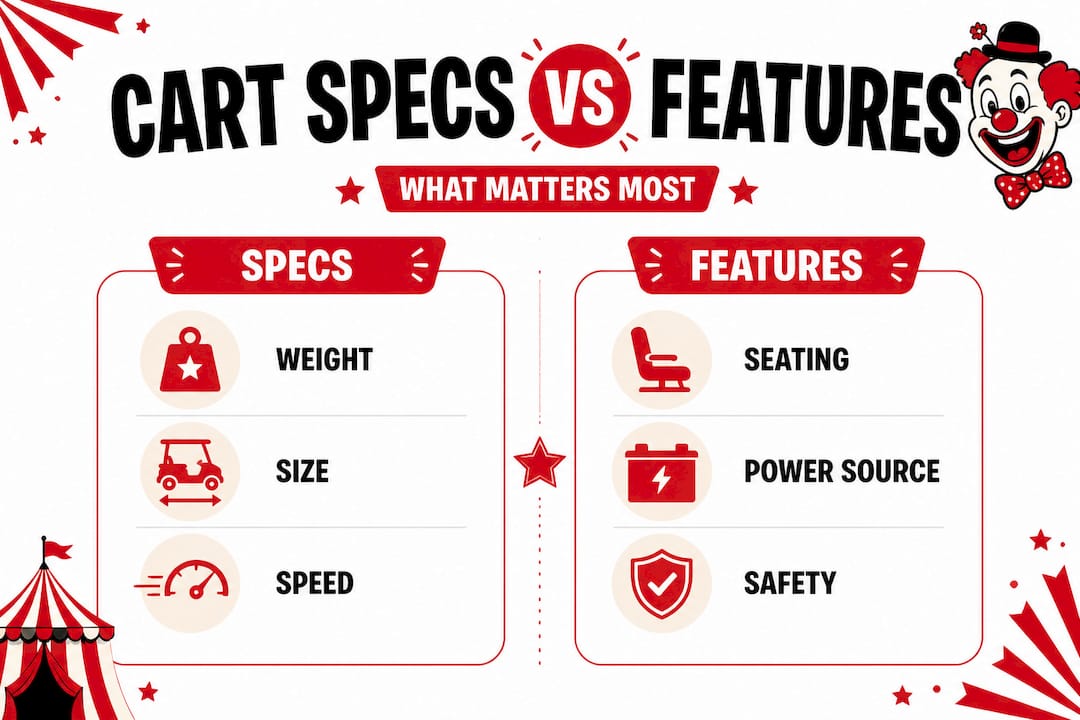
Here’s a quick reference for standard golf cart dimensions:
| Spec | Two-seater | Four-seater |
|---|---|---|
| Width | ~4 feet | ~4 feet |
| Length | ~8 feet | ~9-10 feet |
| Height | ~6 feet | ~6 feet |
| Weight | 900-1,000 lbs | 1,000-1,200 lbs |
| Top speed | 9-15 mph | 9-15 mph |
| Max grade | 25% | 25% |
Key things to know about golf cart dimensions and basics:
- Width is often the limiting factor. Most standard golf paths and residential gates run about 4 to 5 feet wide.
- Length becomes critical if you’re adding rear-facing seats or a cargo bed extension.
- Battery weight is distributed low in the frame, which keeps the center of gravity down and reduces rollover risk on slopes.
- Ceiling height matters if you plan to store the cart inside a structure with overhead clearance issues.
If you’re thinking about a larger configuration, check out the four passenger dimensions for a real-world comparison before deciding. Knowing the physical footprint prevents a lot of buyer’s remorse.
With a clear idea of size and specs, let’s move to the heart of golf cart functionality.
Seating, layouts, and user experience
Seating is where personal use and commercial use start to diverge. A cart for weekend golf with your partner is very different from one used at a resort, campground, or event venue where you’re moving groups of people repeatedly throughout the day.
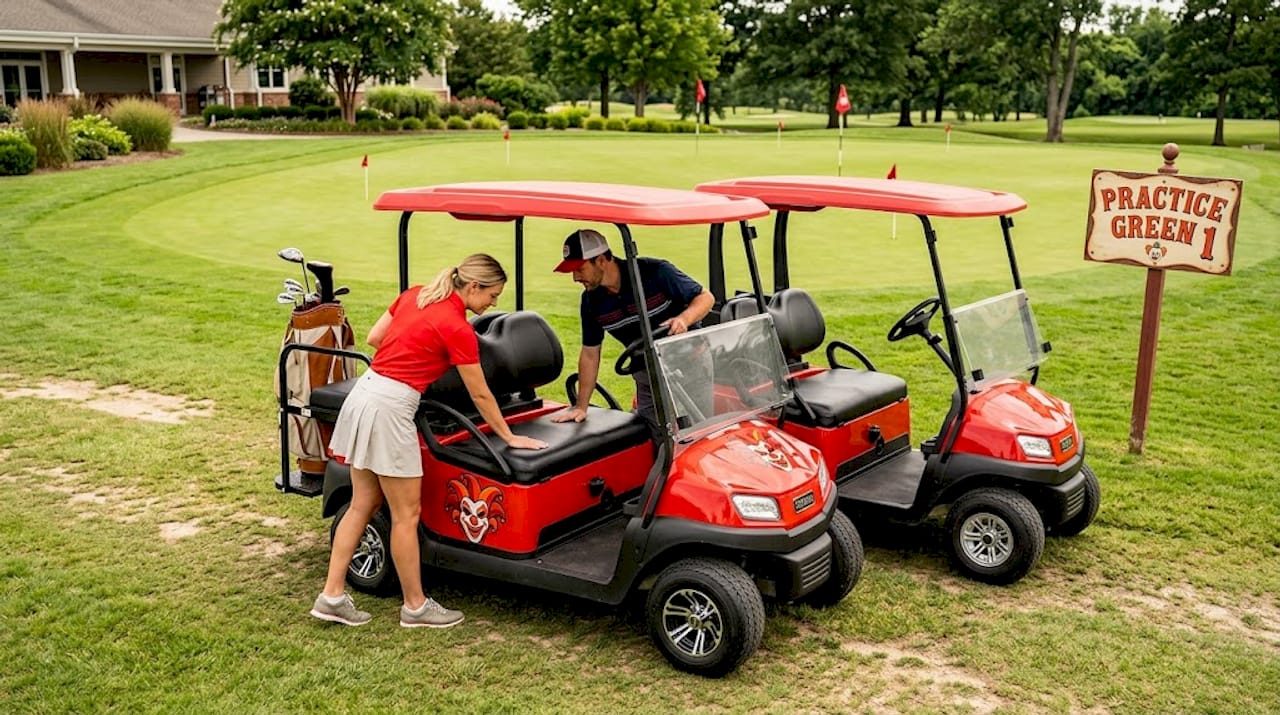
The two most common configurations are two-seater and four-seater layouts. Two-seaters are lighter, easier to maneuver, and cheaper to maintain. Four-seaters give you flexibility when you have guests or need to transport a small crew, but they come with added weight and a longer wheelbase. If you want to compare build quality and available four seater options side by side, looking at specific models helps you visualize the trade-offs.
Here’s how the two seat types compare for practical use:
| Feature | Two-seater | Four-seater |
|---|---|---|
| Passenger capacity | 2 | 4 |
| Maneuverability | High | Moderate |
| Weight | Lower | Higher |
| Cost | Lower | Higher |
| Best use | Personal, golf courses | Events, resorts, families |
| Storage space | More cargo area | Less cargo area |
Rear-facing seats are a popular add-on for buyers who want to squeeze extra capacity out of a standard frame. They fold out from the rear of the cart and face backward, which creates obvious ergonomic issues. More importantly, ejection risks are high in rear-facing seats during sudden acceleration or braking. If you use them, restraints are not optional.
Steps to evaluate which seating layout is right for you:
- Count how many passengers you typically need to move at once.
- Measure the paths, gates, or storage spaces where the cart will operate.
- Decide whether you need cargo space or passenger space, because the two often compete.
- Factor in whether rear-facing seat add-ons are required or if a dedicated four-seater is a better fit.
- Check weight limits for your use case, especially if you’re operating on private property with specific load restrictions.
Pro Tip: If you’re buying for a commercial setting, go one size up from what you think you need. A two-seater that’s “usually enough” becomes a bottleneck fast when you’re managing guests or staff on a busy day. Reviewing color and layout choices alongside capacity specs helps you narrow down without sacrificing practicality.
Once you understand how layouts affect user experience, the next step is evaluating power types for performance and flexibility.
Power and propulsion: electric vs. gas golf carts
The power source shapes nearly every other performance characteristic of your cart. It affects weight, maintenance frequency, range, sound level, and what upgrades are even possible down the road. This decision deserves more thought than most buyers give it.
Electric carts run on battery packs, which is the main reason standard carts weigh as much as they do. That weight is not wasted. It gives the cart stability on grades up to 25 percent and keeps it planted on uneven terrain. Gas carts use internal combustion engines, which are lighter per unit of power but require more ongoing maintenance: oil changes, air filter replacements, spark plugs, and fuel storage considerations.
Key points to compare:
- Electric carts are quieter, produce zero emissions at point of use, and have simpler drivetrains with fewer moving parts to fail.
- Gas carts offer longer range per refuel, especially useful in commercial settings where charging infrastructure isn’t available.
- Maintenance costs for electric are typically lower over time, but battery replacement is a significant expense when packs reach end of life.
- Customization is generally more flexible on electric platforms, where controllers, battery packs, and motors can be swapped or upgraded incrementally.
- Charging habits matter with electric carts. Consistently draining a pack to zero shortens battery life significantly.
For a deeper breakdown of which power source fits your specific situation, reading through an electric vs gas comparison saves a lot of guesswork. If you want to see how modern electric platforms perform in a real-world format, electric cart examples give you a direct look at specs and build quality.
Pro Tip: If you’re leaning toward electric but worried about range, look at 48V and 60V models rather than older 36V platforms. The higher voltage systems handle hills better, recharge faster, and support more accessories without taxing the battery as heavily.
With power source options clarified, let’s focus on the most overlooked feature: safety systems.
Safety features: braking systems, seat design, and visibility
Most buyers spend more time picking out a color than reading about brakes. That’s backwards. The braking system on your golf cart determines how safely it handles on slopes, in wet conditions, and during emergency stops. It’s one of the features where cutting corners creates real risk.
Standard golf carts often come with rear-only drum brakes. They work fine on flat, dry surfaces. But on hills or in situations that require a sharp turn combined with deceleration, rear-only brakes limit what the cart can do safely. Upgrading to four-wheel brakes or regenerative braking (which uses the motor itself to slow the cart, recovering energy in the process) improves both control and stopping distance meaningfully.
As noted in safety documentation on golf cart design, rear-only brakes limit sharp turns and increase instability risk. The upgrade to four-wheel or regenerative systems is worth the investment if you operate on anything other than a flat course.
“The braking system you choose should match the terrain and use case, not just the budget. A cart used on a flat country club fairway has very different needs than one navigating a hillside property or a busy resort pathway.”
Other safety features worth evaluating:
- Headlights and taillights are essential for any cart used near dawn, dusk, or indoors. Many base models don’t include them.
- Mirrors seem obvious, but a surprising number of carts ship without them. Side mirrors and a rearview mirror are inexpensive additions that prevent accidents.
- Seat belts should be standard on any cart with rear-facing seats, but they’re a smart addition to forward-facing seats as well, especially for carts used on public or semi-public roads.
- Horn is a legal requirement in some jurisdictions for street-legal low-speed vehicles (LSVs).
- Reflective strips or flags matter if the cart is used anywhere near vehicle traffic.
For a thorough look at what regulations and safety systems apply to your specific situation, reviewing golf cart safety standards is a practical starting point. It covers what’s legally required versus what’s recommended, which saves you from compliance issues after purchase.
Understanding safety brings us to the customization and accessory features that transform your cart into the perfect fit.
Customization and accessory options
One of the real advantages of buying a golf cart over other utility vehicles is how modifiable they are. The platform is simple enough that a wide range of third-party and manufacturer upgrades bolt on without specialized tools or heavy mechanical knowledge.
Popular accessories buyers add most often:
- Lift kits raise the cart body higher off the ground, allowing for larger off-road tires and better clearance on rough terrain.
- Upgraded tire sets provide better grip on grass, gravel, or mud. All-terrain tires are a common swap for carts used on private property or recreational land.
- LED light bars improve nighttime visibility dramatically and are legal on most private and low-speed public roads.
- Rear cargo beds convert standard passenger carts into light utility vehicles, useful for hauling tools, coolers, or equipment.
- Custom seat covers and cushions improve comfort on longer rides and can be matched to personal or business branding colors.
- Cooler mounts and bag holders are popular additions for golf course use and recreational outings.
- Bluetooth speaker systems and dash-mounted phone holders have become increasingly common on personal use carts.
As noted earlier, standard carts weigh between 900 and 1,000 pounds with batteries accounting for most of that. When you add accessories, pay attention to cumulative weight. Heavy lift kits, larger battery packs, and full cargo beds can push a cart past the load limits its suspension and brakes were designed to handle.
Pro Tip: Prioritize safety upgrades first, comfort upgrades second, and cosmetic upgrades last. A cart with great speakers but no mirrors or lights is a liability. Build your accessory list in order of what protects you and your passengers before what entertains them.
For commercial operators, customization often means branding: matching colors, logos on side panels, or fleet numbering systems. Looking at feature-packed carts that already come with useful add-ons factory-installed can be more cost-effective than buying bare-bones and upgrading later. If you want to plan out an upgrade path, cart upgrade ideas offer direction based on power source and intended use.
Now that we’ve outlined accessory options, let’s share our perspective on what truly matters when choosing a golf cart.
Our take: what most buyers miss when choosing a golf cart
After seeing the mistakes buyers make repeatedly, one pattern stands out clearly: people over-prioritize aesthetics and under-prioritize function. The buyer who spends an hour picking the perfect body color but ten minutes reviewing brake specs is setting themselves up for a frustrating ownership experience.
The counterintuitive reality is that the carts that hold up best over time are rarely the flashiest ones. They’re the ones bought with honest self-assessment: the buyer who admitted they actually needed a four-seater instead of a two-seater because guests visit regularly, or the one who chose an electric model because their storage space has an outlet but no fuel source.
Safety features are where the most consequential decisions happen, and they’re consistently the last thing most buyers focus on. Before looking at seat colors or speaker packages, read through buyer safety tips to understand what the regulations require and what you should want regardless of what’s legally mandated.
The other thing experience teaches quickly: buy for your terrain, not for the course photo on the product listing. A cart that looks great on a flat fairway may handle poorly on the sloped, mixed-surface property where you actually plan to use it. Specifications like grade-climbing ability, brake type, and tire clearance matter more in real-world conditions than most buyers realize until after the fact.
Spend your research time on specs first, looks second. That shift in priority is what separates buyers who are satisfied a year after purchase from those who are already thinking about trading in.
Explore our top golf cart picks and custom options
If you’re ready to move from research to shopping, we’ve made it straightforward to find the right cart for your situation. Whether you need a utility workhorse or a smooth personal ride, the selection at Import Junkies covers the full range.

The featured electric cart in our lineup is a 48V four-seater built with utility and comfort in mind, ideal for both personal properties and commercial operators. If a two-seater fits your needs better, the popular two-seater comes with a built-in golf bag holder and a clean silver finish. For buyers who need serious off-road capability alongside cart-like utility, the utility ATV cart delivers four-wheel drive performance with a plow-ready build. Browse, compare, and reach out with any questions before you buy.
Frequently asked questions
How fast do standard golf carts go?
Typical golf carts reach speeds between 9 and 15 mph, which is appropriate for golf courses, private communities, and designated low-speed vehicle roads.
What is the benefit of rear-facing seats in golf carts?
Rear-facing seats increase passenger capacity on a standard frame, but ejection risks are high during sudden acceleration, so safety restraints should always be used with them.
Are gas or electric golf carts better for customization?
Electric carts offer more accessible upgrade paths for battery packs, controllers, and tech features, while gas carts support more robust performance modifications; your best choice depends on how and where you plan to use the cart most.
What are the safety risks with rear-only brakes?
Rear-only brakes limit a cart’s ability to handle sharp turns safely, particularly on slopes; upgrading to four-wheel brakes or regenerative braking significantly improves control in those conditions.
Can golf carts climb steep hills?
Most standard golf carts can climb grades up to 25 percent, though performance depends on battery voltage, total cart weight, and the condition of the drivetrain.
Recommended
- What Is a Golf Cart? Key Features, Uses, and Buying Tips – Saferwholesale || Import Junkies || Great Sports
- Customize your golf cart: complete personalization guide – Saferwholesale || Import Junkies || Great Sports
- How to inspect used golf carts: a step-by-step guide – Saferwholesale || Import Junkies || Great Sports
- Street Legal Golf Cart Requirements Explained – Saferwholesale || Import Junkies || Great Sports


