


 Location
 Login
Login
The top trike uses outdoors are recreational touring, cargo and errands, child development and training, adaptive and senior mobility, off-road adventure, and commercial utility work. Trikes earn their place in each of these roles for the same core reasons: three-wheel stability that removes the balance barrier, cargo capacity that two-wheelers can’t match, and pedal-assist options that make longer or hillier rides accessible to a wider range of riders. Whether you’re planning a lakefront scenic loop, hauling supplies across a property, or introducing a toddler to outdoor riding, the right trike configuration handles the job. Importjunkies carries electric cargo and utility trikes alongside a full range of outdoor vehicles, making it a practical starting point for any of these use cases.
The primary outdoor uses at a glance:
- Recreational touring and scenic rides — greenways, lakefronts, coastal circuits
- Commuting and cargo errands — grocery runs, campus trips, last-mile delivery
- Child growth-stage training — 3-in-1 and 4-in-1 adjustable trikes for ages 9 months to 5 years
- Adaptive and senior mobility — low step-through frames, supportive seating, pedal-assist
- Off-road and adventure riding — fat tires, suspension forks, packed dirt and gravel trails
- Commercial and utility work — groundskeeping, property transport, vendor carts
Table of Contents
- What each outdoor trike use actually looks like in practice
- Which trike features matter most for outdoor use
- Safety gear and basic U.S. legal notes for outdoor trike riders
- How to plan an outdoor trike outing and what it costs
- Pre-ride checks and basic maintenance for outdoor trikes
- Practical tips by rider type
- Key Takeaways
- Why trikes are more useful outdoors than most riders expect
- Ready to find the right trike or utility vehicle at Importjunkies
- Sources and further reading
What each outdoor trike use actually looks like in practice
Recreational touring is the most common entry point. A typical outing runs 8–15 miles on a paved greenway or lakefront path, with stops for photos or a snack. Guided electric trike tours in places like Orlando’s wetlands use padded seats and optional pedaling so riders of varying fitness levels can cover two hours of wildlife-rich terrain without fatigue. The quiet motor is a genuine advantage here: e-trikes approach wildlife without the noise that scares animals off.
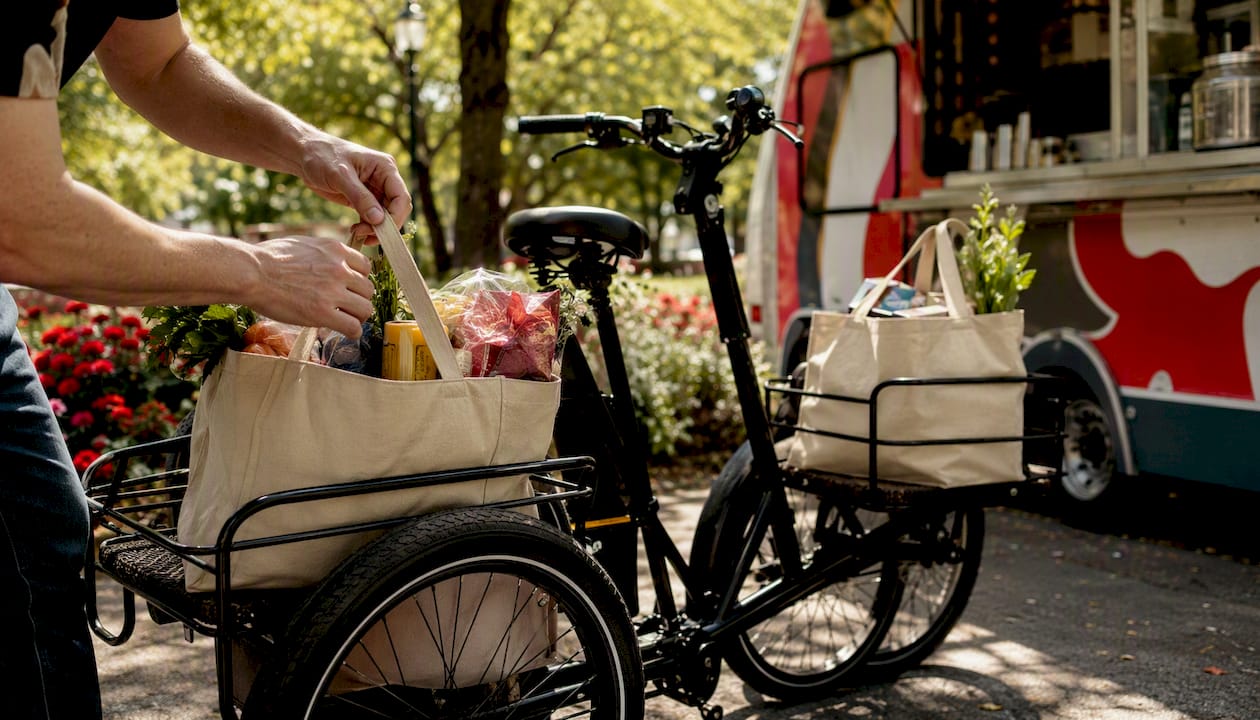
Cargo and commuting shifts the focus to practicality. A cargo trike with a rear rack and front basket handles a full grocery run without a car, and the low step-through frame makes loading and unloading easy. For last-mile delivery or campus errands, the key specs are payload rating and battery range. Owners report that cargo racks and sufficient battery range open up practical utility uses like hauling supplies and running long-range errands that would otherwise require a vehicle.
Kids’ trikes are a category of their own. Growth-stage models like the Ride 'n Learn 3-in-1 Trike from Little Tikes and the Tricycoo 4.1 from Joovy transition from parent-push mode through guided learning to independent riding, covering ages 9 months to roughly 5 years. The adjustable harness, canopy, and footrest options mean the same trike serves multiple developmental stages rather than sitting unused after one season.
Adaptive and senior mobility is where trikes outperform standard bikes most clearly. A recumbent e-trike with a low center of gravity, rear differential, and wide tires creates a stable, comfortable platform for riders with back or joint concerns. Semi-recumbent e-trikes are specifically called out by hands-on reviewers as ideal for mixed-surface greenways and packed dirt trails when comfort is the priority.
Off-road adventure demands a different build. Mountain trikes use knobby tires, robust frames, and multi-speed gearing to handle campground loops, homestead paths, and packed gravel. The design priority is stability and cargo capacity, not speed. For a more adrenaline-focused experience, drift trikes use low-traction rear wheels and electric motors on closed paved courses for controlled sliding — a specialized activity that belongs on a dedicated track, not a public trail.
Commercial and utility work rounds out the list. Groundskeepers, property managers, and food vendors use cargo trikes for the same reason warehouses use forklifts: moving loads efficiently in tight spaces. The three-wheel platform carries more than a bike and costs far less to operate than a truck.
Pro Tip: For wildlife photography outings, choose an e-trike with a quiet hub motor rather than a mid-drive. Hub motors run nearly silently at low speeds, letting you approach birds and deer without triggering a flight response.
Which trike features matter most for outdoor use
Matching features to your intended use saves money and prevents frustration. Here’s how the key specs map to real outdoor activities:
- Pedal-assist levels: Adjustable assist is the single most important spec for touring, commuting, and adaptive riding. Expert reviews confirm that customizable pedal-assist levels and suspension forks are what let an e-trike handle everything from smooth greenways to packed dirt trails. Look for at least three assist levels.
There’s also a strong case for choosing a trike over a standard e-bike when stability and cargo are priorities. E-trikes offer advantages over e-bikes specifically in load-carrying, low-speed stability, and accessibility for riders who can’t balance a two-wheeler confidently.
Pro Tip: If you’re buying for mixed use — some cargo, some touring — prioritize a rear rack rated for at least 50 lbs and a motor with at least 500W. That combination handles most real-world outdoor tasks without needing a second trike.
Safety gear and basic U.S. legal notes for outdoor trike riders
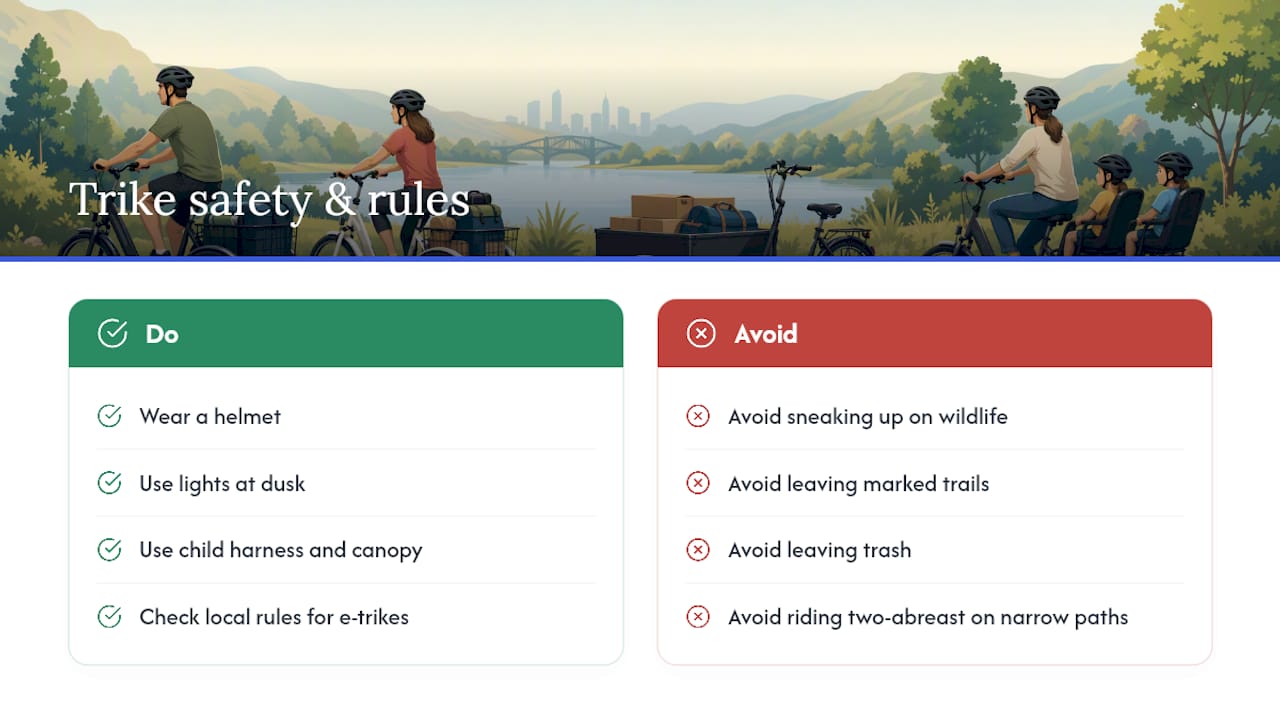
A helmet is non-negotiable, even on a slow cargo trike. Add front and rear lights for any ride near dusk, reflective clothing or a vest for road crossings, and a mirror mounted to the handlebar so you’re not turning your head to check traffic. For family trike outings with young passengers, a secure child harness and a canopy or sun shield are standard equipment, not optional extras.
On trails, yield to pedestrians and horses, keep speeds low near wildlife, and ride single-file when the path narrows. On roads, check your state’s rules: in most U.S. states, a pedal-assist trike under 750W is classified as a bicycle and follows bicycle laws, but a throttle-only or higher-wattage model may be classified differently. Rules vary by state and sometimes by municipality, so verify with your local DMV or transportation authority before riding on public roads. For a deeper look at registration and road-legal requirements, the street legal trike scooter guide on Importjunkies covers the key considerations.
E-trikes are quiet enough to surprise wildlife at close range. On nature trails, announce your approach with a bell or a brief verbal call, and give animals space rather than using the quiet motor as a stealth tool. Leave-no-trace principles apply: stay on marked trails, pack out all waste, and avoid sensitive habitats.
Pro Tip: Pack sunglasses or goggles for coastal and open-road trike tours — wind at riding speed dries eyes quickly, and UV exposure adds up over a two-hour sightseeing run.
How to plan an outdoor trike outing and what it costs
Typical outing durations break down by type: a scenic recreational loop runs about one to a few hours, a commuting or errand run takes less time, and a guided trike tour usually runs several hours with planned stops. Plan your route within your battery’s comfortable range, not its maximum.
Packing checklist for any outdoor trike ride:
- Water (at least 20 oz per hour of riding)
- Small toolkit: tire levers, a patch kit or spare tube, a multi-tool
- Extra layers or a windbreaker — wind chill drops perceived temperature fast
- Sunscreen and sunglasses
- Binoculars if wildlife spotting is part of the plan
- Phone mount and a charged battery pack for longer rides
On cost: entry-level recreational trikes start well below $500, while quality adult e-trikes typically range from the mid-hundreds into the low thousands depending on motor power, battery size, and cargo features. Cargo-focused utility trikes and electric utility vehicles sit at the higher end of that range. Guided trike tours generally run at a moderate price per person for a few hours, depending on location and equipment provided. Renting before buying is a smart move if you’re unsure which trike type fits your routine.
Pre-ride checks and basic maintenance for outdoor trikes
A five-minute pre-ride check prevents most mechanical problems on the trail.
Pre-ride checklist:
- Tire pressure: check against the sidewall spec; under-inflated tires increase rolling resistance and wear faster
- Brake test: squeeze both levers before moving — pads should engage firmly with no sponginess
- Lights: confirm front and rear lights are charged and functioning
- Battery: start with at least 80% charge for any ride over 10 miles
- Cargo security: check that racks, bags, and any attached loads are fastened and won’t shift
For e-trike battery care, charge after each ride rather than letting the battery sit depleted. For long-term storage (more than two weeks), store the battery at 40–60% charge in a cool, dry location. Avoid full deep-discharge cycles, which shorten cell life over time.
Keep the chain clean and lightly lubed, inspect tires for cuts or embedded debris after off-road rides, and check suspension fastener torque every few months if you ride rough terrain regularly. If you hear unusual noises from the motor or drivetrain, notice a persistent drop in range, experience brake fade, or spot any frame cracks, take the trike to a shop before the next ride.
Practical tips by rider type
Families with young children
Choose a growth-stage trike that adjusts as your child grows rather than buying a new model each year. Plan short loops of 30–45 minutes with a rest stop built in. Bring sun protection — a canopy attachment or a hat and sunscreen — and a snack. Avoid routes with heavy vehicle traffic until kids are old enough to understand basic road awareness.
Commuters and errand riders
A theft-resistant U-lock paired with a secondary cable lock is the minimum for leaving a trike unattended. Integrated racks and panniers keep cargo secure without adding awkward side weight. Front and rear lights should be permanently mounted, not clip-on, so you never forget them. If your route is mostly paved, a second set of narrower tires can meaningfully improve rolling efficiency over the stock wider tires that come on many e-trikes.
Delivery and rental fleet operators
Payload rating and rack modularity matter more than top speed. For an e-trike fleet, build a battery-swap schedule so no vehicle sits idle waiting to charge during peak hours. Choose models with accessible drivetrain components to keep maintenance quick and in-house where possible.
Adaptive and senior riders
Low step-through frames are the first filter — getting on and off the trike safely matters before any other spec. Test-ride adjustable pedal-assist ranges before buying; the difference between assist level 1 and level 3 can mean the difference between a comfortable 10-mile ride and an exhausting one. Dual-passenger trikes also offer advantages over golf carts for mobility-focused outdoor use, particularly on paths where a full-size cart won’t fit.
Key Takeaways
Trikes are most useful outdoors when the right build matches the specific use: stability and pedal-assist for touring, payload and racks for cargo, growth-stage adjustability for kids, and low step-through frames for adaptive riders.
| Point | Details |
|---|---|
| Match build to use | Touring needs pedal-assist and comfort; cargo needs payload rating and racks; off-road needs suspension and knobby tires. |
| Kids’ trikes grow with the child | 3-in-1 and 4-in-1 models cover ages 9 months to 5 years, supporting motor-skill development across stages. |
| Safety gear is non-negotiable | Helmet, front/rear lights, and reflective clothing are required for every outdoor ride; child harnesses for young passengers. |
| Battery care extends e-trike life | Store at 40–60% charge for layups; charge after each ride; avoid full deep-discharge cycles. |
| Importjunkies for utility and cargo models | Importjunkies carries electric cargo trikes and utility vehicles suited to heavy-duty outdoor tasks and property work. |
Why trikes are more useful outdoors than most riders expect
The conventional wisdom treats trikes as a beginner’s bike or a senior’s compromise. That framing undersells what a well-specified trike actually does. A cargo trike with a 300-lb payload rating and a 500W motor handles property work that would otherwise require a truck. A recumbent e-trike opens up 20-mile greenway rides to people who haven’t been able to ride a standard bike in years. A growth-stage kids’ trike covers four or five developmental years in a single purchase.
The real gap is awareness. Most outdoor enthusiasts think first of ATVs, e-bikes, or golf carts when they want a versatile outdoor vehicle. Trikes sit in a practical middle ground: more stable than a bike, quieter and cheaper to run than an ATV, and more maneuverable on narrow paths than a golf cart. The trike vehicles overview on Importjunkies lays out the category comparisons clearly for buyers who want to see how trikes stack up before committing.
For first-time buyers: rent or demo before you buy. A 30-minute test ride on the trike type you’re considering tells you more about fit, seating comfort, and handling than any spec sheet.
Ready to find the right trike or utility vehicle at Importjunkies
Importjunkies offers direct-to-public wholesale pricing on electric cargo trikes, utility vehicles, and multi-seat outdoor vehicles — no dealership markup, no long wait for a quote. If you’re comparing a cargo trike against a heavier utility vehicle for property work, the 1000W electric cargo utility truck is a strong starting point: three-wheel platform, electric drive, and cargo-ready build for outdoor tasks. For multi-passenger or heavier-duty outdoor transport, the 48V 4-seater electric utility cart covers family outings and property runs in one vehicle.

Browse the full catalog at Importjunkies, compare specs side by side, and contact the sales team directly if you need help matching a model to your specific outdoor use case.
Sources and further reading
| Source | Key claim | Relevance |
|---|---|---|
| Electric Bike Report — Velotric Triker Review | Adjustable pedal-assist and suspension are essential for mixed-surface outdoor riding | Features section |
| Little Tikes — Ride 'n Learn 3-in-1 Trike | Growth-stage trikes support motor-skill development from 9 months to 5 years | Kids’ trikes section |
| Orlando Travel — Electric Trike Wildlife Tour | Guided e-trike tours use padded seats and optional pedaling for 2-hour wildlife outings | Recreational touring |
| Addmotor — Spytan E-Trike Uses | Cargo racks and battery range enable practical hauling and long-range errands | Cargo and utility uses |
| GYROOR — Mountain Tricycle Guide | Mountain trikes prioritize stability, cargo capacity, and traction for off-road use | Off-road adventure |
| GoElectro — Drift Trike Rovinj | Drift trikes use low-traction rear wheels and electric motors on closed paved courses | Adrenaline/track activities |
| The Cozumel Guide — Sightseeing Trike Tour | Coastal trike tours require wind and sun preparation for longer exposure rides | Planning and safety |
| Sixthreezero — Recumbent E-Trike Review | Recumbent e-trikes with rear differentials suit mixed-surface trails for comfort-focused riders | Adaptive and senior use |
| Joovy — Tricycoo 4.1 Kids Tricycle | 4-in-1 kids’ trikes provide adjustable support, harnesses, and sun protection across developmental stages | Kids’ trikes and families |
| Importjunkies — Trike Features and Benefits | Category overview comparing trike types and outdoor use cases | Internal reference |
Recommended
- Purpose of Utility Trikes: Work, Recreation, Versatility – Saferwholesale || Import Junkies || Great Sports
- Trike vehicles: features, benefits, and how they compare – Saferwholesale || Import Junkies || Great Sports
- Best Motortrike.com Alternatives in the US for 2026 – Saferwholesale || Import Junkies || Great Sports
- Top 6 roadsmithtrikes.com Alternatives Trike Options 2026 – Saferwholesale || Import Junkies || Great Sports


